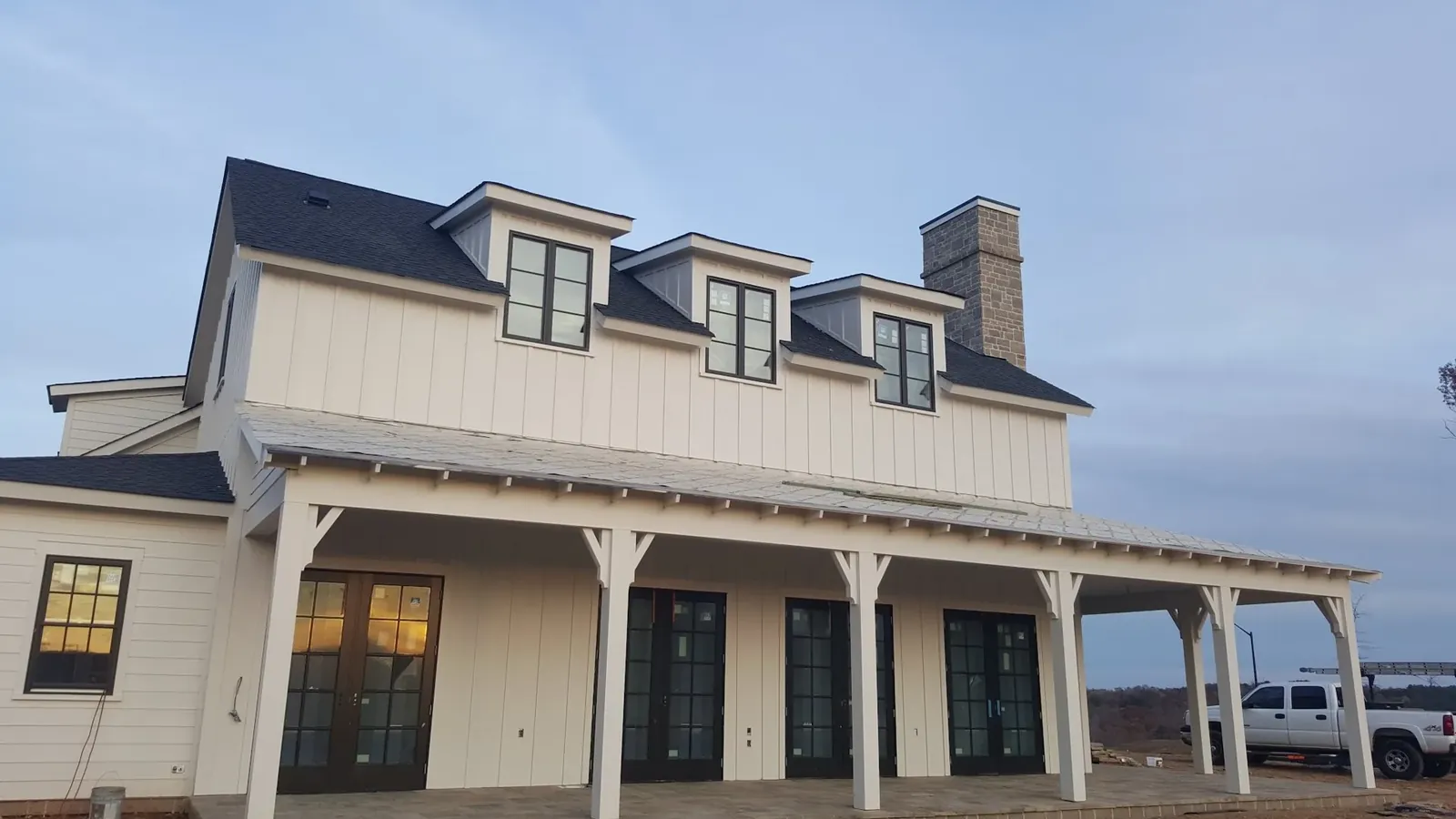
What to know before you choose
Board-and-batten describes an appearance, not a single material. Traditionally, wide vertical boards are joined visually by narrower battens. Today, a similar rhythm can be created with fiber cement panels and trim, engineered wood products or formed vinyl panels. Those systems can look related from the street while differing in joints, finish, maintenance and installation. Start by choosing the appearance you want, then compare the actual materials that can achieve it.
Benefits, with the full picture
Vertical rhythm with a clear purpose
Our design recommendation is to use vertical lines where they support the architecture: a tall gable, an entrance or a simple main wall. The effect depends on spacing and proportion. More battens do not automatically create a more refined result.
A choice of underlying materials
Hardie panels and battens create the look in fiber cement. LP offers engineered wood panel and vertical products, while CertainTeed offers vinyl board-and-batten panels. Choosing the profile does not commit you to one material or care routine.
Useful as a full exterior or an accent
Board-and-batten can cover the main walls or be paired with a quieter horizontal siding. Comparing both approaches on the same elevation helps you judge whether the change adds definition or makes the house visually busy.
What to weigh before deciding
- Batten locations should be planned around windows, doors and corners. A small drawing or elevation study can reveal narrow leftover spaces before installation.
- Panel joints and horizontal transitions need the detail specified for the selected product. A decorative batten does not automatically make the joint behind it watertight.
- Maintenance follows the actual material and finish. Painted fiber cement, engineered wood and vinyl should not be described as interchangeable systems.
- Changes in wall depth affect corner trim, window surrounds and nearby roof details. Review those transitions alongside the pattern.
A closer look at the work