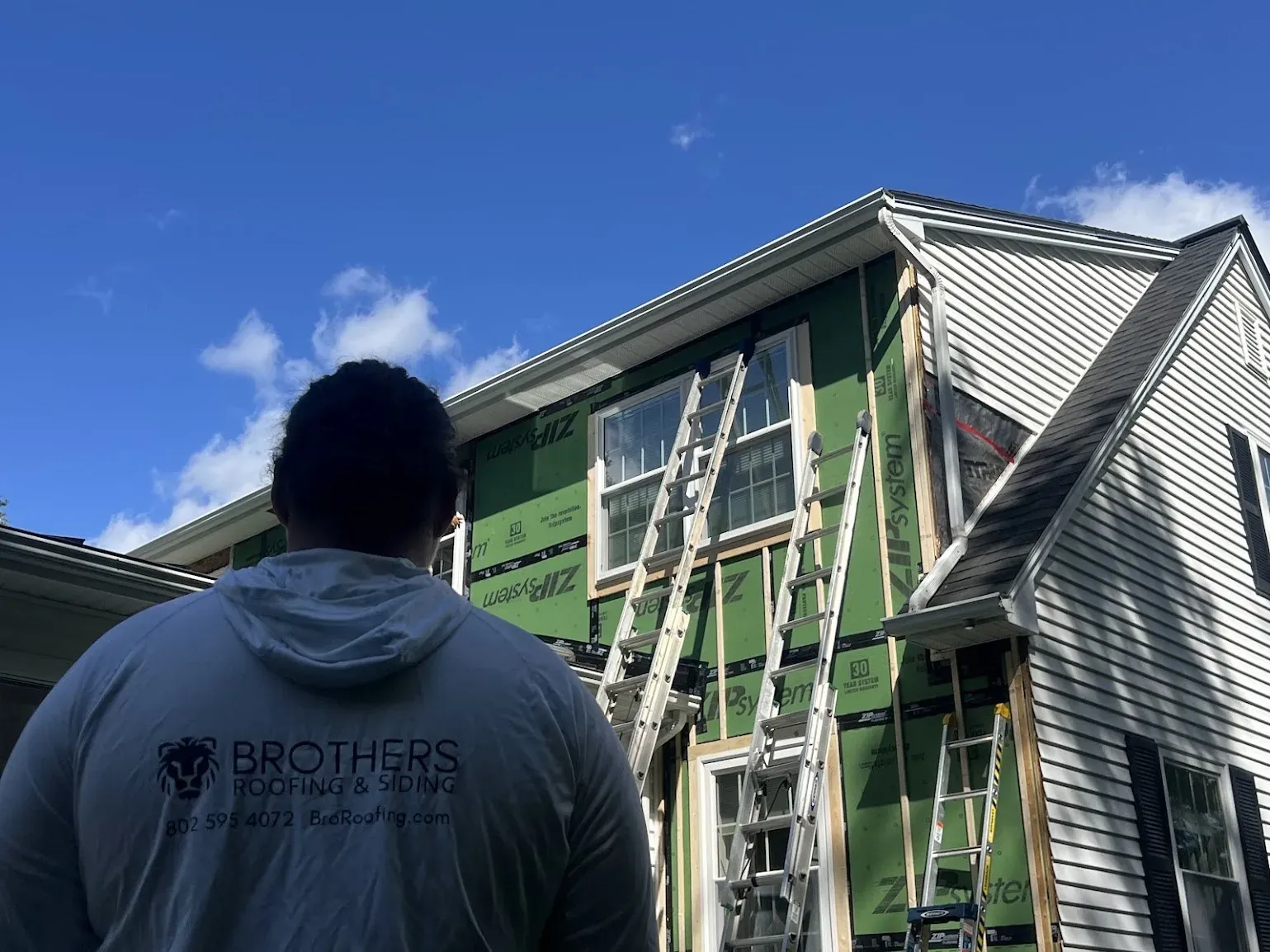
What to know before you choose
Siding is the visible outer layer of a wall, but the boards or panels are only part of the job. A complete replacement also considers the wall underneath, how rain drains away, and the connection to windows, doors, roof edges and decks. The right choice balances the architecture of your home, the upkeep you want to take on and the condition of the existing wall. Compare complete assemblies rather than choosing from a color sample alone.
Benefits, with the full picture
An exterior that fits the house
Lap siding, vertical panels and shingle accents create different proportions. Start with the roof, windows and main entrance, then choose a restrained combination of profiles and trim widths. A well-considered layout can make an older addition feel connected to the original house.
A chance to address concealed problems
Replacement can provide access to damaged sheathing and incomplete flashing. Addressing those conditions before installing the finish is an important part of protecting the structure. New siding should never be used simply to hide a recurring leak.
Maintenance you can plan for
Vinyl, fiber cement and engineered wood have different cleaning, finish and repair needs. Discuss those differences alongside appearance. The most useful option is one whose ongoing care fits your expectations, not just one that looks good on installation day.
What to weigh before deciding
- The condition behind existing siding may be unknown until removal. Ask how discoveries will be photographed, explained and priced before additional work begins.
- Siding alone is not a complete insulation upgrade. If comfort or drafts are a concern, discuss air sealing and insulation as separate parts of the proposed wall assembly.
- Existing window depth, deck connections, fixtures and roof intersections affect the trim and flashing scope. Compare estimates that account for the same details.
A closer look at the work